
Governance rules and releases
How a governance draft becomes an immutable active release visible to clients and data planes.
Governance management and runtime execution use different views. A rule record is editable management state; a release is a versioned artifact that can become active, enter progressive rollout, be stopped, or be selected for rollback.
Management and runtime views
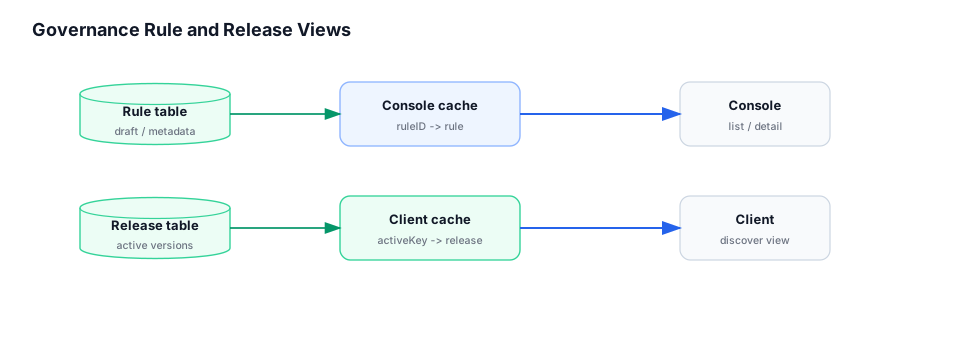
Console reads rule identities, scope, revisions, and draft content. Clients and data planes query active releases indexed for runtime matching.
For unified traffic governance, the cache keeps separate maps for rule IDs and active release keys. This prevents an uncommitted edit from silently changing runtime behavior.
Create and update
Domain handlers validate service scope and rule-specific content before storage. New rules receive a generated ID and revision. Updates advance the management revision but do not activate a release.
Traffic security, mirroring, and Mock share a business template while retaining their typed specifications and authorization methods.
Publish an active release
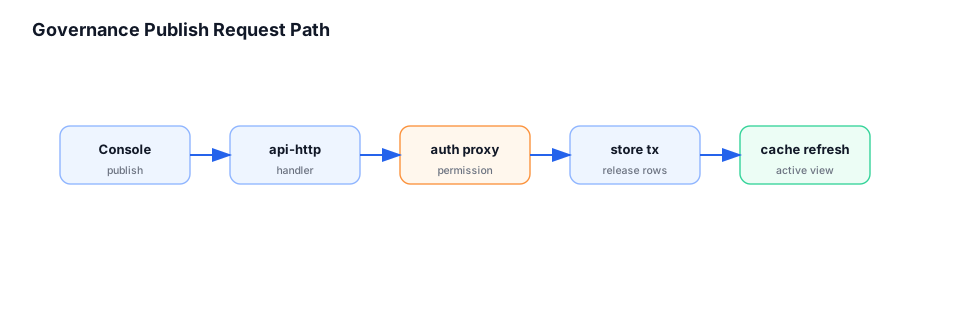
Publish operations exist for routing, rate limiting, circuit breaking, fault detection, lanes, lossless lifecycle, traffic security, mirroring, and Mock.
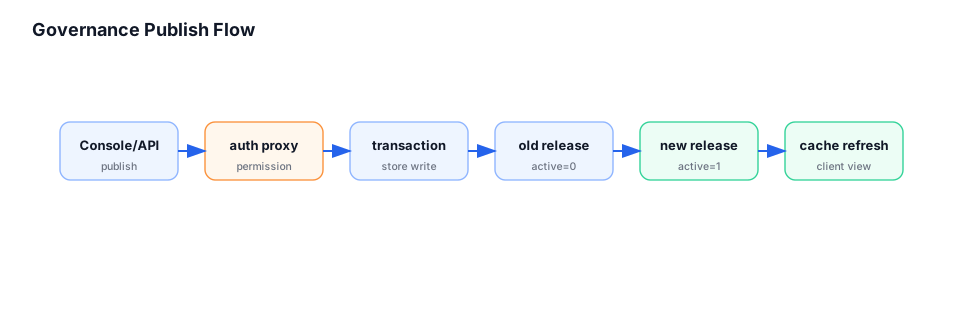
A release records rule identity, active status, version, description, release type, and timestamps. Activation first makes conflicting older releases inactive, then writes the new active version.
Rollback and progressive delivery
RollbackGovernanceRulesselects a previous version as the runtime view.StopbetaGovernanceRulesstops a progressive release.DeleteGovernanceRulesremoves a release according to domain rules.GetRuleReleaseslists the version history for review.
Rollback is a new activation decision; it does not mutate history into pretending the failed release never existed.
Cache propagation
Storage changes enter the shared governance updater and then fan out to rule-specific caches. Console queries and runtime queries keep their separate indexes throughout this process.
Publication means the control plane has produced an active view. Actual traffic behavior still depends on a connected SDK or data plane that implements the policy.